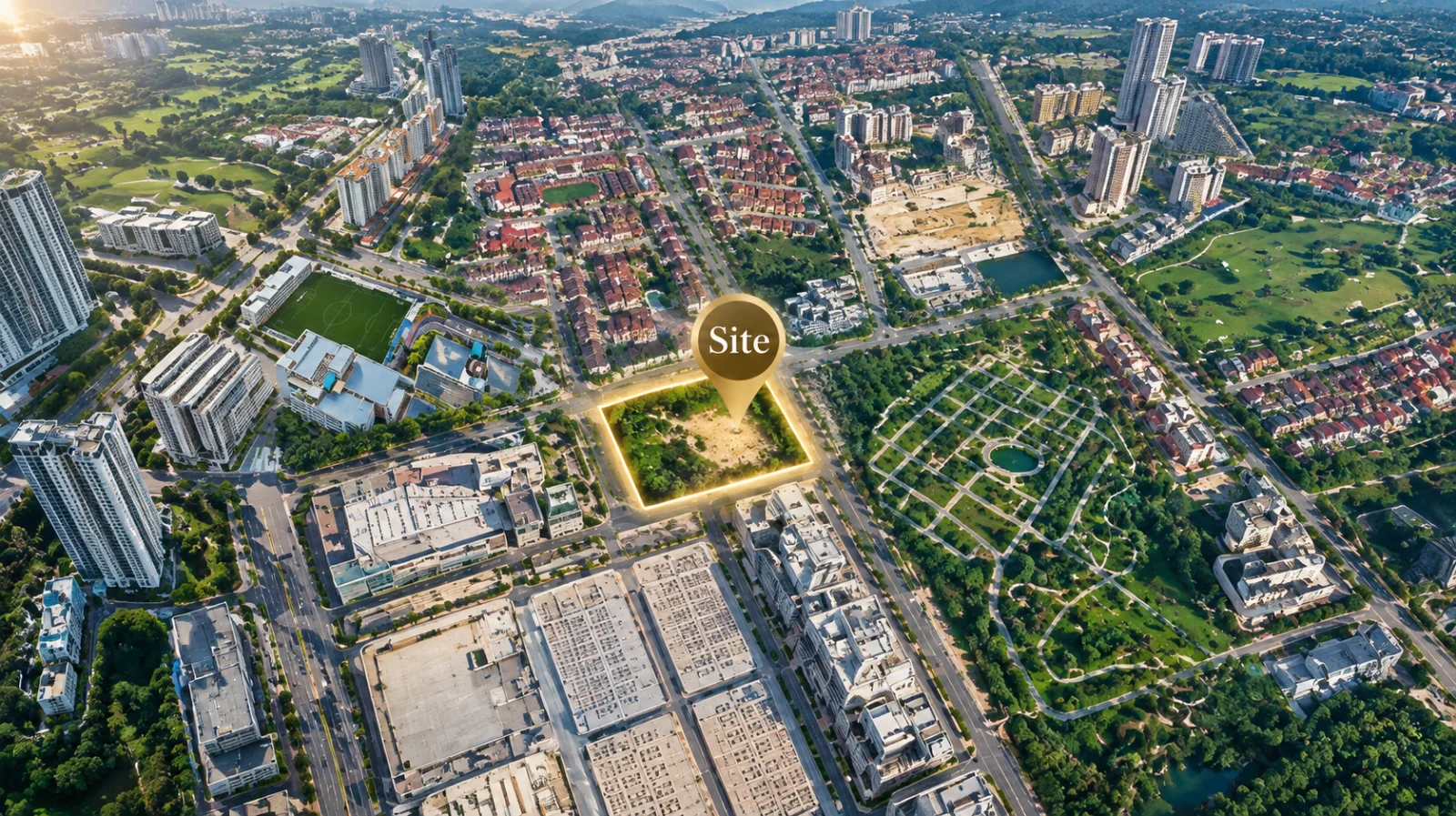
The short answer
Bukit Jalil is a planned township rather than a single selling point: Pavilion Bukit Jalil, an 80-acre Recreational Park, schools and universities, KL Wellness City and Technology Park Malaysia support demand. The video analysis puts new-launch prices at about RM800 to RM1,100 per sq ft in the central zone near Pavilion (up to about RM1,250 for some buildings) and RM600 to RM800 per sq ft in outer zones. Earlier projects near the park have risen from roughly RM750 to RM840 per sq ft at launch to about RM950 to RM1,050 in the secondary market. The main drawbacks are traffic and high density, and the address matters less than the zone you buy in.
Quick facts
- Central zone (near Pavilion and the park): new launches about RM800 to RM1,100 psf, up to about RM1,250
- Outer zones: about RM600 to RM800 psf, with larger, often freehold units
- Comparison: Mont Kiara new launches about RM900 to RM1,200 psf
- Rents: central units quoted at about RM3,500 to RM4,000 a month furnished; weaker locations struggle to reach RM2,500
- Demand drivers: Pavilion Bukit Jalil, an 80-acre park, schools, universities, KL Wellness City, Technology Park Malaysia
- Main drawbacks: traffic (especially on event days) and high density
This article summarises a recorded analysis of Bukit Jalil, published in September 2026. Prices and rents are those quoted in the analysis, so confirm current figures against live listings and price lists. For projects on sale, see the Bukit Jalil area page and our Bukit Jalil investment outlook.
Why Bukit Jalil is described as a township, not a postcode
Bukit Jalil is in the south of Kuala Lumpur and is often called the next Mont Kiara. The case for it rests on a combination of things in one place, rather than a single selling point, and the analysis argues that this combination is what lets rents hold up over time.
Transport
There are three LRT stations in the area: Awan Besar, which serves the main commercial zone beside the Recreational Park; Bukit Jalil, beside the stadium; and Muhibbah, which serves a more industrial area. A nearby MRT station links to TRX, so some office workers drive to the station and take the train in. The area also connects to several highways, giving access to KLCC, Sunway, Puchong and Petaling Jaya, and the airport is convenient.
What supports demand
- Pavilion Bukit Jalil is one of the country's largest malls. It was criticised as too big when it opened, but parking is now hard to find, and the mall repositioned the whole area, as Mid Valley and Bandar Utama did for their neighbourhoods.
- An 80-acre Recreational Park sits in the middle of the area. Land near the park is fixed in supply, which is why projects within walking distance of it command higher rents.
- Golf and low-density living bring higher-income families, which supports community quality.
- Education: a well-known local Chinese school draws families, and the area has international schools, Asia Pacific University (APU) and the International Medical University (IMU). Since the 2024 MM2H changes, more foreign families have moved in.
- Medical: KL Wellness City opposite Pavilion Bukit Jalil has a first-phase hospital of more than 600 beds, expandable to 1,000, with a gross development value of about RM11 billion and gradual opening from the end of 2026. See KL Wellness City and The Vividz.
- Jobs: Technology Park Malaysia covers 686 acres, with more than 150 technology companies and more than 30,000 knowledge workers, plus data centres and a plan for thousands of further jobs.
Prices and track record
Mont Kiara new launches average about RM900 to RM1,200 per sq ft in the analysis. In Bukit Jalil, new launches in the central zone run about RM800 to RM1,100 per sq ft, sometimes up to RM1,250, while outer-zone projects run RM600 to RM800. The analysis cites projects near the park that have appreciated: one launched around 2019 at about RM800 per sq ft and now trades around RM1,000 in the secondary market, another launched in 2021 at about RM840 and now about RM1,050, and a 2023 project launched at about RM750 and now about RM950. Units in a central project were quoted at about RM3,500 to RM4,000 a month furnished, while some units in weaker locations struggled to reach RM2,500.
The zones
| Zone | Character | New-launch psf | Trade-off |
|---|---|---|---|
| Centre, near Pavilion and the park | Most walkable, most proven, strongest rental demand | RM800 – RM1,100 (up to about RM1,250) | High density; busiest traffic; little land left |
| Near the international school | Earlier stage, with potential as the area develops | Existing projects about RM600 – RM800 | Not yet walkable to the LRT and Pavilion |
| Muhibbah side | Larger units, often freehold, for tighter budgets | RM600 – RM800 | Closer to industrial areas; lower rents than the centre |
| Golf club side | Quiet, green, higher-end, with landed homes | Premium | Larger units may take longer to let |
The analysis' main point is that buying the right zone matters more than buying the Bukit Jalil name, and it advises not using the central zone's rents as a reference for outer-zone properties.
Drawbacks
- Traffic. The roads around Jalan Jalil are congested, and event days at the stadium and arena make it worse. Residents often plan around concert nights.
- Density. New towers keep appearing around the park, and the central zone is already dense.
- Rents have kept rising despite both, which the analysis attributes to how complete the surrounding ecosystem is.
Who it suits
Investors who prioritise a rental ecosystem, families who want schools, a park and a mall nearby, and buyers who understand which zone they are buying into. It is a poor fit for buyers who want quiet, low density or a quick drive anywhere at peak hours. Compare launches on our Bukit Jalil area page, including EXSIM's three projects.
Video walkthrough
The full walkthrough is in Mandarin. The written article above covers the same ground in English.
Get the price list and floor plans
We can send the current list of new launches in Bukit Jalil with sizes, prices and tenure, with no obligation.
WhatsApp for the price list Register your interest
Frequently asked questions
Is Bukit Jalil property a bubble?
The analysis argues it is not a bubble in the central zone, because prices there are backed by Pavilion Bukit Jalil, a large park, schools, medical facilities and jobs, and by a track record of appreciation. It cautions that outer-zone properties do not share the central zone's rents or growth, so the zone you buy in matters more than the address.
What is the price per sq ft in Bukit Jalil?
About RM800 to RM1,100 per sq ft for new launches in the central zone near Pavilion Bukit Jalil, sometimes up to about RM1,250, and RM600 to RM800 per sq ft in outer zones. Mont Kiara new launches are about RM900 to RM1,200 in the same analysis.
What are the main drawbacks of Bukit Jalil?
Traffic, particularly around Jalan Jalil and on stadium and arena event days, and high density as new towers fill the land around the park.
Which part of Bukit Jalil has the strongest rental demand?
The central zone near Pavilion Bukit Jalil, the Recreational Park and LRT Awan Besar, which is the most walkable and has the strongest rents. Outer zones are cheaper but let for much less.
What supports property demand in Bukit Jalil?
Pavilion Bukit Jalil, an 80-acre Recreational Park, schools including international schools, APU and IMU, KL Wellness City, and Technology Park Malaysia with more than 150 technology companies and more than 30,000 knowledge workers.
Who is Bukit Jalil not suitable for?
Buyers who want a quiet, low-density setting or who cannot tolerate peak-hour traffic, and investors who assume outer-zone properties will rent as well as central ones.